
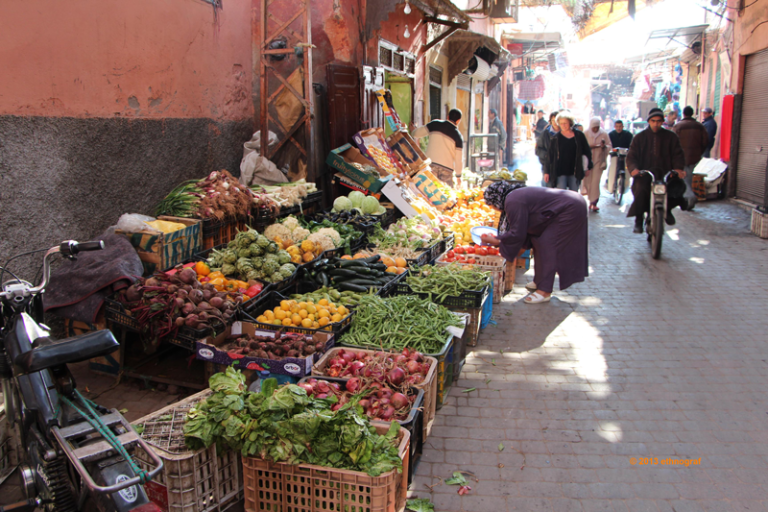
2025 has been a pivotal year for our network. The highlight was undoubtedly the workshop we held in Milan in July. This event successfully brought together the diverse experiences and viewpoints that animate our anthropological community. Together, we reflected on the priorities we must address as food anthropologists to make a positive contribution to planetary progress, while also deepening our understanding of the complex facets of contemporary food culture. The primary outcome of the discussion to date is the Manifesto, presented below.
We look forward to talking with you more about these points at the upcoming EASA 2026 conference.
Today
By 2050, the way we grow, distribute, and consume food will determine not only global health outcomes but also the liveability of our ecosystems and the stability of our societies. Already, climate disruption and ecological degradation are intensifying, threatening the very foundations of global food security. At the same time, these environmental shifts threaten the cultural practices, rituals, and identities tied to land and foodways, exacerbating the structural inequalities that underpin the current global food system. The erosion of food knowledge, widely understood as ‘traditional’, frequently further compounds these crises, as dominant political-economic structures and industrial monocultures, standardised supply chains, and commercial branding of heritage foods commodify and at the same time marginalise local and indigenous practices and products. This loss is not incidental but structurally produced: land grabs, restrictive intellectual property regimes, and the devaluation of non-Western epistemologies all contribute to the erosion of diverse foodways that represent a repository of ecological wisdom, adaptive strategies, and social cohesion.
In the face of escalating challenges, technology and policy alone do not offer resolute answers. While technological innovations are expanding rapidly, they remain unevenly distributed and often unclear and unpredictable in their long-term directions, especially in a context of uneven access to the benefits derived from corporate consolidation and financialisation of the food sector. Issues concerning access to and control over technology and data are at stake as well as questions concerning sustainability and equity, reinforcing existing power imbalances rather than challenging them, deepening divides rather than bridging them. Moreover, policy responses remain fragmented, frequently siloed between rigid disciplinary or institutional boundaries, despite the inherently interconnected nature of food systems. This compartmentalised approach limits governments’ capacity to respond holistically to overlapping crises and tends to overlook the needs of minorities and marginal communities.
These enduring gaps prompt us, anthropologists, to find a shared voice and direction for envisioning and creating food futures that are ecologically sound, socially just, and culturally meaningful—reconnecting food with care, knowledge, and collective life. While anthropology is a broad discipline that encompasses a plurality of viewpoints, definitional understandings, and even methods, we can still aim to collectively envision an updated and refined orientation for our field in the context of current and compounding crises. This is thus a call to action to reclaim the future of food by integrating anthropological insights into policy, sustainability, and social action while recognizing that we anthropologists and theoreticians are as much a part of the food system as farmers, politicians, consumers, and the other beings with which we share this planet.
What we know
Anthropology offers more than critique; it provides tools for transformation. By centring voices not always given a space at the table, tracing food’s entanglements with history, identity, emotion, and bodies and revealing the cultural logics behind consumption and production, the anthropology of food not only identifies what’s broken but also highlights how communities resist, repair, and reimagine food systems, as they also live with and within them, informally or otherwise. It contributes critical insights for building inclusive, just, and ecologically sound futures. Anthropology has thus developed key frameworks for understanding food in ways that help address global challenges.
Food is not (just) fuel
Food is not just bodily fuel—it carries emotion, memory, ritual, and is central to identity, belonging, social hierarchy, and processes of exclusion. Anthropology shows how cultural dimensions of food security are often overlooked in policy and development frameworks. As climate change and ecological collapse disrupt local and indigenous lifeways, food’s symbolic and emotional meanings become vital for fostering resilience and ensuring cultural continuity, especially in contexts where land loss, migration, and environmental change threaten both physical and cultural survival and viable adaptation.
Injustice is the issue
The food system mirrors and reproduces social and environmental inequalities. Pollution, climate impacts, and displacement disproportionately harm marginalised communities—such as riverine populations poisoned by runoff, farmers displaced by extraction, or families denied food access. Anthropology situates food insecurity within larger structures of class, race, and power, calling for responses that integrate ecological care with human rights, redistribution, and participatory governance.
To be ‘local’ is not enough
Anthropology reveals how the popular notion of ‘local food’ frequently perpetuates inequalities in land access, market distribution, and recognition. While the term suggests sustainability, its commodification often prioritises marketable aesthetics over authentic knowledge, and scalability over sustainable practices. Ethnographic work shows how smallholders, indigenous peoples, and urban growers can maintain place-based foodways in systems which are, at present, functionally exclusionary to those not operating within the dominant, globalized food system. By amplifying these realities, anthropology offers pathways to more grounded and equitable food economies.
Food is care
Much of the labour that sustains biodiversity and social life—performed disproportionately by women, elders, and migrants—remains largely invisible. Activities like cooking, seed saving, caregiving, and food waste management are crucial to household and ecological wellbeing, but are undervalued in many social systems. Anthropology frames care as infrastructure, showing how this work supports resilience and intergenerational continuity. Recognizing and revaluing such labour becomes essential amid technological and economic change since it provides the vital human and relational counterbalance to development models that risk prioritizing economic profit over social cohesion and sustainability.
Heritage is about change and dynamism
Local food knowledge(s) and practices, often framed as ‘traditional’, are under pressure from corporate appropriation, standardisation, and intellectual property regimes. Anthropology resists the fossilisation of food heritage, viewing it instead as dynamic and evolving. Diasporic cuisines, youth innovations, and hybrid traditions all reflect the adaptability and dynamic creativity of culinary practices. Anthropology supports policies that protect living food cultures without freezing them into rigid categories.
‘Regenerative’ is the word
Rather than sustaining a status quo which is already broken for many communities across the world and increasingly precarious for others, anthropology promotes regenerative food systems grounded in restorative practices and multispecies justice. Drawing on indigenous and local knowledge, we highlight agroecology, rotational farming, and marine stewardship as culturally embedded strategies for ecological renewal. These insights challenge top-down conservation models and support grassroots, ecologically rooted responses to our current environmental crises.
Where to go
With conceptual clarity, deep methods, and a justice-oriented ethos, anthropology brings a vital perspective. Rooted in data drawn from lived experience, it shows that equitable and lasting transformation requires careful listening, sustained engagement, and cultural humility to build food systems that are socially just, ecologically regenerative, and culturally meaningful. Anthropology offers both a framework for understanding and tools for intervention, and some clear directions of action emerge from the debate.There can be no so-called ‘food transition’ without reckoning with the social, cultural, economic and political complexities of food that anthropology reveals.
Create bridges
Building a different food system begins with transforming how food is understood in policy, education, and everyday life. Anthropology offers essential tools for this shift, revealing food as a relational experience shaped by memory, identity, power, and history—not just a commodity or biological need. However, this change of paradigm asks for a shift of heuristic approach too; one that values and integrates the epistemological depth offered by anthropology in its dialogue with related disciplines or those concerned with food from a variety of methodological and theoretical standpoints, be they life or social sciences. This asks us to be engaged in the creation of such a shared space where disciplines do not simply coexist, but actively dialogue and reshape each other’s assumptions, methods, and priorities, moving beyond technocratic or one-size-fits-all solutions, opening the way to food futures grounded in justice, reciprocity, and contextual sensitivity. This reorientation requires a pragmatic and necessary shift to rethink what we consider valuable knowledge and to redefine success beyond quantitative metrics.
Build with communities
To make anthropological insights actionable, we must actively engage beyond academic settings and work with communities as co-creators of knowledge. This means designing and implementing participatory research methods—such as collaborative ethnography, participatory video, and storytelling—not only to document local food practices, but to support communities in articulating and advancing their own visions of food sovereignty.
We should also critically examine and expose how ‘local food’ narratives are often co-opted, while working to centre the voices and experiences of indigenous peoples, small-scale farmers, and urban food producers. Centering these voices requires that anthropology overcome any trace of its knowledge-extractivist past and experiment with formats that align with its current goals. By producing creative outputs—like films, exhibitions, and artistic interventions—we can make research findings more accessible and impactful for both the public and policymakers.
Overall, we have a key role in bridging lived experience and institutional decision-making, ensuring that food governance and cultural preservation reflect the values, needs, and knowledge of the communities most affected.
Embedding anthropological insight in governance
Too often, food policy is developed without a deep understanding of the cultural and historical contexts of the communities it affects. Anthropologists should work to fill this gap by bringing attention to care work, cultural diversity, and long-term social impacts, ensuring that food policies are inclusive and aligned across sectors such as agriculture, climate, health, and heritage. The role of the anthropologist here is to challenge technocratic models and advocate for place-based, context-sensitive approaches that reflect how people grow, cook, and share food. To do this effectively, we must engage directly with policy processes—translating ethnographic insights into practical recommendations and collaborating closely with decision-makers. The structural dialogue with institutions, ministries, local administrations, or international organisations, is key, since anthropological knowledge can contribute to more just and responsive food systems, particularly in addressing the unequal distribution of environmental harm and access to resources across different communities.
Building critical food literacy
Education plays a crucial role in shaping how future generations relate to food, yet it is frequently framed through scientific or economic lenses, sidelining social, cultural, and political dimensions. As many anthropologists are already situated within the academic and educational sphere, we are well-positioned to actively intervene in this space by promoting critical food literacy, encouraging students to ask where food comes from, who produces it, and how power and inequality shape food systems. We should provide contributions to the development and delivery of educational programs, in schools, universities, and public initiatives, that validate diverse foodways as legitimate forms of knowledge, and integrate cultural expression, ecological awareness, and historical context, to support learners to connect food to identity, place, and justice. In so doing, we help cultivate informed, critically engaged citizens, equipped with an anthropological lens that enables them to challenge dominant food narratives and imagine alternative futures rooted in justice and care.
Supporting grassroots food movements
Food justice and sustainability are not abstract policy goals—they are built daily by communities through practice, resistance, and care. We should actively support these grassroots efforts by working alongside seed-saving networks, mutual aid groups, school food advocates, urban farmers, and other grassroots local initiatives helping to document, strengthen, and scale their impact, in an effort to decentralize power, expand access and foster civic participation in the food system.
Through co-produced research and sustained advocacy, we can help amplify the voices of those most affected by food injustice, ensuring their knowledge informs broader food policy and public discourse. This work must be reciprocal, not extractive—rooted in solidarity and long-term commitment rather than short-term fieldwork.
We should also engage in public storytelling, media collaborations, and exhibitions that connect community struggles to institutional frameworks, making local action visible and legible to policymakers and broader audiences. By doing so, we can help build more just, resilient, and participatory food systems.
What to do
Food anthropology provides a lens to understand and offers directions along which we can act. The AnthroFood2050 Manifesto is not a blueprint. It is a call to action for anthropologists, other researchers, farmers, policymakers, activists, and all eaters to come together in reimagining food systems that are not only efficient, but also just, joyful, and regenerative. To turn this vision into reality, there are three arenas where our effort should concentrate; these areas are deeply connected to the broader epistemological and practical directions that define anthropological engagement with food systems today.
Interconnection
We must strengthen the collaboration across research, policy, education, and activism since anthropological insights are most impactful when embedded within collaborative, cross-sectoral efforts. This interdisciplinary interconnection enables knowledge to flow in multiple directions and strengthens the capacity of anthropology to intervene where it matters most: in legislative frameworks, land-use policies, school curricula, and community-led innovation, to mention only a few cases. Thus, creating bridges among different worlds represents the first step to ensure that diverse voices and worldviews are included in the envisioning and creation of a food system that are capable of responding to the complex challenges of the future.
Application
Transformative ideas require real-world implementation, translating theory and insight into practice and action. Identifying pilot projects and securing funding is crucial for turning anthropological knowledge into tangible outcomes. Whether through co-designed seed-saving initiatives, participatory urban food policy labs, or multimedia storytelling campaigns that make invisible care work visible, such projects demonstrate how anthropological methods can directly support food sovereignty, biodiversity conservation, and social inclusion. Each successful pilot project thus serves as proof of a working model.
The crucial next step is to network these models, fostering a shared body of experience across research, policy, education, and activism. This collaborative knowledge not only feeds back into and enriches anthropological scholarship but fosters a shared consciousness and a common direction, igniting a process of co-creation aimed at building a just and resilient food system fit for the challenges of 2050.
Never stop
Ongoing dialogue is the lifeblood of any transformative movement. As food systems face environmental, technological, and political pressures, anthropology must remain adaptive and engaged. Despite the hardship, we must do what we do best: we should sustain the dialogue within the discipline and across society about the present and future of food. Conversations with farmers, youth, educators, and policymakers keep priorities grounded in lived experience. Through forums, workshops, collaborative writing, and digital platforms, we can refine shared visions for food futures while amplifying the discipline’s value in policy, education, and activism. These exchanges will support the integration of cultural and ethical perspectives in governance, strengthening critical food literacy efforts and equipping new generations to interrogate dominant narratives and imagine alternatives. They will bolster efforts in education to promote critical food literacy, equipping future generations to interrogate dominant narratives, uncover hidden power asymmetries, and reimagine food as a profoundly political domain. They will nurture a shared knowledge and perspective about the future, creating a sense of belonging, solidarity and common destiny, allowing the process to continue in a trans-generational effort to make the future.
Tomorrow
This manifesto is not an endpoint but a starting point; an invitation to a shared commitment. The challenges of 2050 are great, but the human capacity for care, creativity, and collaboration is greater. Anthropology has never been just an academic pursuit, nor a neutral one—it is a critical instrument for transformation. So, let us take our work seriously, not as distant observers, but as engaged participants in the struggle. Our discipline offers more than a critique of a broken system; it provides a compass for navigating toward a better one. By weaving together diverse knowledge, grounding our actions in justice, and fostering a spirit of regeneration, we can collectively cultivate a future where food nourishes not only our bodies but also our cultures, our ecologies, and our shared planetary futures. The future of food is not a destiny to be discovered, but a reality to be co-created, one seed, one story, and one relationship at a time. Thus, let us act with purpose, clarity, and solidarity, building food systems that nourish bodies, restore lands, and honour the histories and futures carried in every seed and every meal. This is what food anthropology is about.
Authorship note
The Anthrofood 2050 Manifesto constitutes the ideal outcome of the collective endeavors of the EASA Anthropology of Food Network. It results from the coordination efforts of Michele F. Fontefrancesco and Sabine Parrish. The initial draft emerged from the Anthrofood 2050 workshop convened in Milan, Italy, in July 2025 under the auspices of the EASA Anthropology of Food Network, with the participation of the following individuals: Aida Alymbaeva; Pedro Alves; Giovanni Aresi; Nir Avieli; Imogen Bevan; Yaiza Agata Bocos Mirabella; Jillian Cavanaugh; Ben Davenport; Francesco Della Costa; Rizkyana Dipananda; Claude Fischler; Michele F. Fontefrancesco; Elena Fusar Poli; Carmine Garzia; Alessandro Guglielmo; Jenny Herman; Susanne Højlund; Maria Jose Jordan; Jonatan Leer; Elena Marta; Raul Matta; Silvia Mazzucotelli Salice; Furqan Meerza; Maxime Michaud; Alice Mulhearn Williams; Michal Nahman; Elena Neri; Giulia Nicolini; Sabine Parrish; Lucya Passiatore; Elisa Pastorelli; Denise Pettinato; Andrea Pieroni; Branwyn Poleykett; Denisse Román; James Sarick-Whiteside; Paul Sperneac-Wolfer; Andja Srebro; Stanley Ulijaszek; Michele Varini; Leandro Ventura; Domenico Volpicella; Dauro Mattia Zocchi.
This draft underwent further refinement through a public revision process of the document, wherein feedback was openly solicited and incorporated from workshop participants and members of the EASA Anthropology of Food Network, including, inter alia: Rafi Grosglik; Tina Bartelmeß; Zofia Boni; Urjani Chakravarty; Nora Katharina Faltmann; Dimitris Giannakopoulos; Pablo Alonso Gonzalez; Anita Kooij; Ewa Kopczyńska; Joana Lucas; Ikma Citra Ranteallo; MennaTullah Reda Atta; Inga Reimers; Kathleen C. Riley; Ruzanna Tsaturyan; Marisa Wilson.