
Convenors
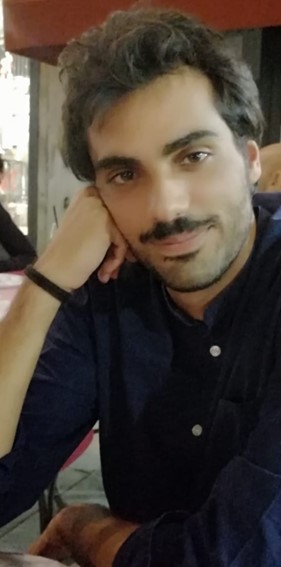
Francesco Diodati
University of Milano-Cattolica
f.diodati(at)campus.unimib.it
Francesco Diodati got his PhD in Cultural and Social Anthropology at the University of Milano-Bicocca, Italy. His main research interests are aging, family care, community care, home-care services, caregiving fatigue.
Francesco’s PhD research project aimed to investigate the political and moral implications of the recognition of caregiving fatigue in Northern Italy. Exploring caregiver self-help groups, communities for mutual-help and social services training courses for professional home-care workers, he studied how narratives of caring fatigue are involved in the negotiation of traditional family responsibilities to care for elderly parents, and which are the political implications of this negotiation for the broader elderly care system. He also examined the way differently positioned social actors recognize the boundaries between family and professional care. In 2020, his manuscript Recognizing Caregiving Fatigue in the Pandemic: Notes on Aging, Burden and Social Isolation in Northern Italy received the Margaret Clark Award (Co-winner) from the Association of Aging, Gerontology and the Life-Course (AAGE).
Convenor
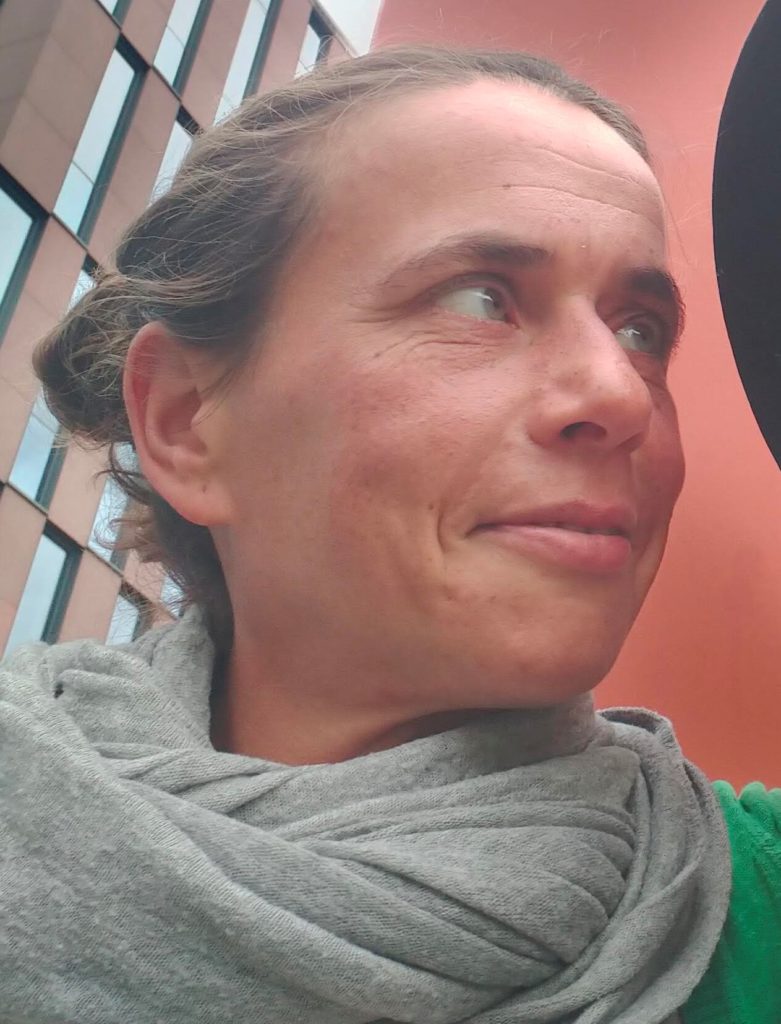
Christine Verbruggen
KU Leuven
christine.verbruggen(at)kuleuven.be
Christine Verbruggen is a historian (2005) and social and cultural anthropologist (2018), born, raised, and residing in Belgium. Her master’s thesis research on dwelling as world-building with dementia in a nursing home as ‘milieu’ (2018), explored the potential of new materialist and post-phenomenological methodologies and epistemologies, to disrupt the boundedness of the ‘person with dementia’ as a unit of care, policy, and research. She continues fundamental research on the second nature of dementia and personhood in her PhD research with people with the diagnosis of dementia in a daycare center in Flanders (KU Leuven, 2019-2024). Here, she ethnographically follows – and co-creates – the inclusive trajectories people with dementia generate as they move through different spheres of belonging. Exploring the ‘uncanny’ as a possible sphere for encounters in difference, she pays particular attention to the affectivity and intra-activity of processes of (dis)integration and transformation. She is also interested in discursive formations of old age identities, the ethics of research with ‘vulnerable’ populations, health assemblages, anthropologies of care, and post-critical theory.
As a member of the editorial team of the Journal of Anthropology and Aging (AAGE), Christine gladly promotes interesting new work in the field of anthropology of aging and the life course.
Convenor
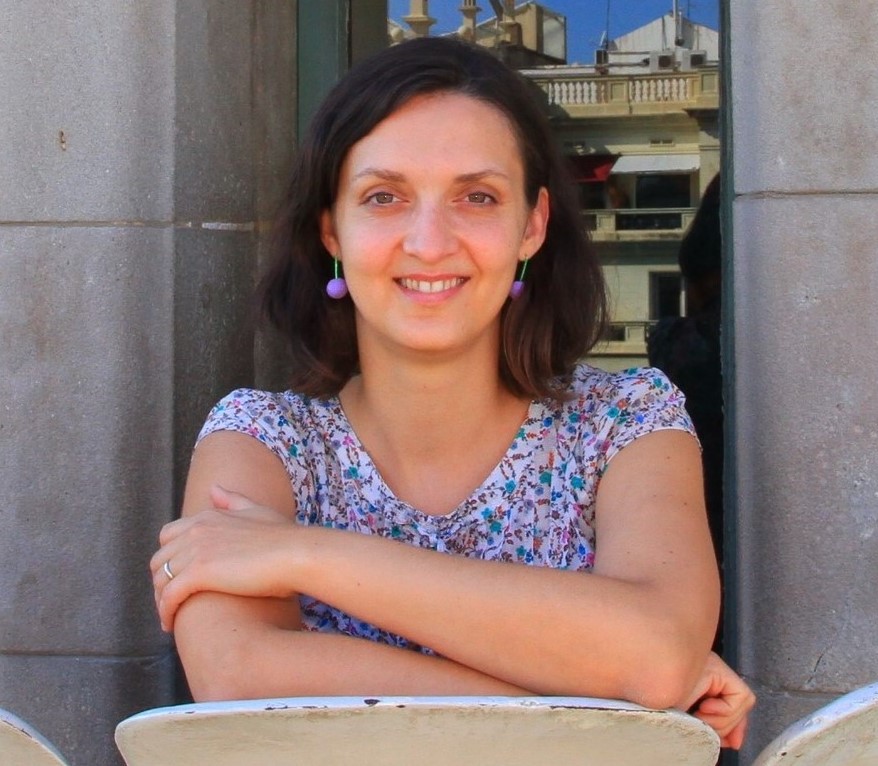
Ľubica Voľanská
Slovak Academy of Sciences
Lubica.Volanska(at)savba.sk
Ľubica Voľanská is a senior research fellow at the Institute of Ethnology and Social Anthropology of the Slovak Academy of Sciences in Bratislava. Her main area of interest comprises ethnological/anthropological research within historical anthropology, intangible cultural heritage, intergenerational relations, family memory, kinship and family, old age, and (auto) biographical research. She focus mainly on the connection between the “big” history and the lives of individuals in the context of the social structures they are a part of.
Ľubica’s current projects are related to social networks of senior citizens in the urban environments, ageing in place, design for all ages and intergenerational relationships in the times of the Covid 19 pandemic. She authored the book „V HLAVE TRIDSAŤ, V KRÍŽOCH STO.” Starnutie v autobiografiách v Bratislave a Viedni. [„OLD BODIES, YOUNG MINDS“. Ageing in Autobiographies from Bratislava and Vienna.], 2016. The work focuses on old age and ageing in autobiographical texts and other ego-documents in both cities.
Convenor
Martina Laganà
University of Bayreuth
laganamartina@gmail.com
Martina Laganà has been a scholarship researcher in Applied Anthropology at Eastern Piedmont University since 2021. She is involved in the implementation of elderly care programs within assisted living facilities in Northern Italy. In particular, her field research has focused on understanding how material aspects influence residents’ well-being and what arts and cultural programs can contribute to the deinstitutionalization of care environments. In my fieldwork I’m interested in exploring participatory and arts-based methods for broader participant and audience engagement.
A few months ago, I joined the “Images of Care Collective” with the aim of promoting visual engagement with research on aging, life-course and generations. In 2024, I was nominated for the role of the AGENET Web and Social Media Coordinator
Web editor and Social media coordinator
Communication Officers
Melanie Stewart
University of Copenhagen
melliejoe@outlook.com
Communication Officer
Mel is a master’s student in Social Anthropology at the University of Copenhagen, originally from the UK. Her research interests focus on medical stewardship, pharmaceuticals, and anthropologies of care.
Her current research examines the social life of antibiotics in Kyrgyzstan. Using ethnographic and multimodal methods, including interviews, participant observation, and a collaboratively developed game, she explores how antibiotics are accessed, understood, and used in everyday care practices. The game serves as a shared space for mapping the social realities of antibiotic use and for facilitating the circulation of forms of knowledge that are typically unevenly distributed, through which participants articulate experiences, interpretations, and decision-making processes surrounding antibiotic use. Her work is concerned with documenting how historical medical legacies and social relations shape contemporary practices of medical stewardship.
Piero Amand
University of Ottawa
pamand@uottawa.ca
Communication Officer
Piero holds a degree in anthropology from the Catholic University of Louvain, Belgium, and is currently a doctoral student in anthropology at the University of Ottawa, Canada. His master’s thesis (2024) focused on community intervention with men who have sexually abused minors in Quebec. He was particularly interested in how their narratives, identities, and trajectories are reconfigured through their interactions with other perpetrators of sexual abuse, with social workers, the penal system, and their relatives. As part of his doctoral studies, he is developing an ethnographic research project on the phenomenon of running away among children and adolescents on the border between Quebec and Ontario. At the intersection of the anthropology of childhood and political anthropology, his thesis aims to understand the knowledge that young people acquire through their experiences of running away, the practices of mutual aid that punctuate this experience, the role of running away in their trajectories, and the spatial dimension of escape. More broadly, he is interested in the practices of resistance and freedom of children and adolescents in the face of age-related power relations.
previous AgeNet Working Group (2022-2024)
Swetlana Torno
Max Planck Institutute for the Study of Religious and Ethnic Diversity
Convenor (2022-2024)
Simone Anna Felding
German Center for Neurodegenerative Diseases
Convenor (2022-2024)
Francesco Diodati
University of Milano-Cattolica
Convenor (2022-2024)
Irina Kretser
St. Petersburg State University
Web editor and Social Media Coordinator (2022-2024)
previous AgeNet Working Group (2020-2022)
Barbara Pieta
Max Planck Institute for Social Anthropology
Convenor (2020-2022)
Matthew Lariviere
University of Bristol
Convenor (2020-2022)
Amy Clotworthy
University of Copenhagen
Social media coordinator (2020-2022)
Swetlana Torno
Max Planck Institute for the Study of Religious and Ethnic Diversity
Web editor (2020-2022)
previous AgeNet Working Group (2018-2020)
Jason Danely
Oxford Brookes University
Convenor (2018-2020)
Monica Palmberger
University of Vienna
Convenor (2018-2020)
Amy Clotworthy
University of Copenhagen
Social media coordinator (2018-2020)
Cristina Douglas
University of Aberdeen
Social media coordinator (2018-2020)
Barbara Pieta
Max Planck Institute for Social Anthropology
Social media coordinator (2018-2020)