
Nobody has invited them and yet they’re here: scammers frequently attack online users and some prospective conference participants have become their target. Regrettably, some members have even suffered significant financial losses!
Please stay alert! EASA and its Exec will NEVER ask you for money on EASA’s behalf! Any personalised emails asking members for money transfers and promising reimbursements are fraud and should be ignored/deleted.
Scammers use deceitful tactics, some of which are really sly. The most recent strategy is to write desperate-sounding emails allegedly from Hayal Akarsu’s account, asking for very specific amount of money and using an email address that only after careful scrutiny turns out to be false. Please note that Hayal’s email has not been hacked: scammers use a fake email address pretending to be the EASA President.
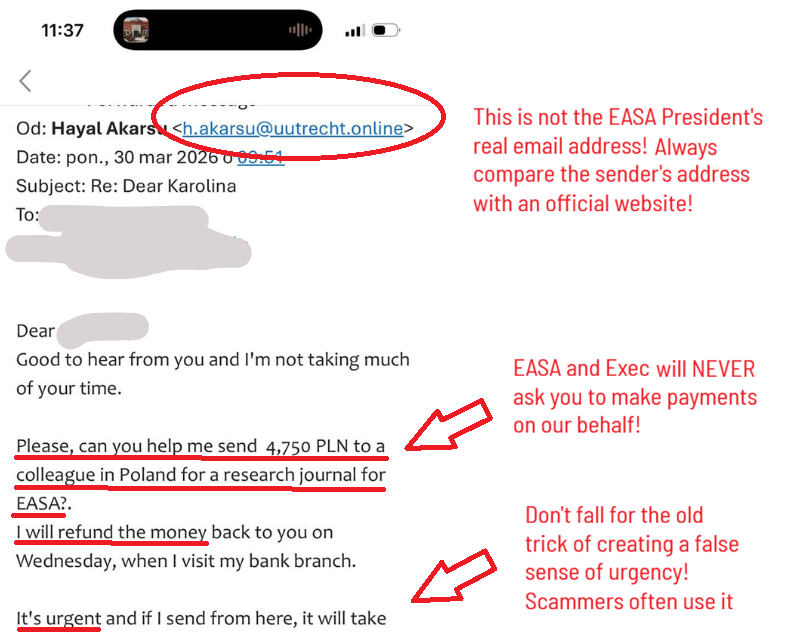
Other examples of scam attempts:
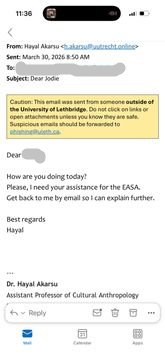
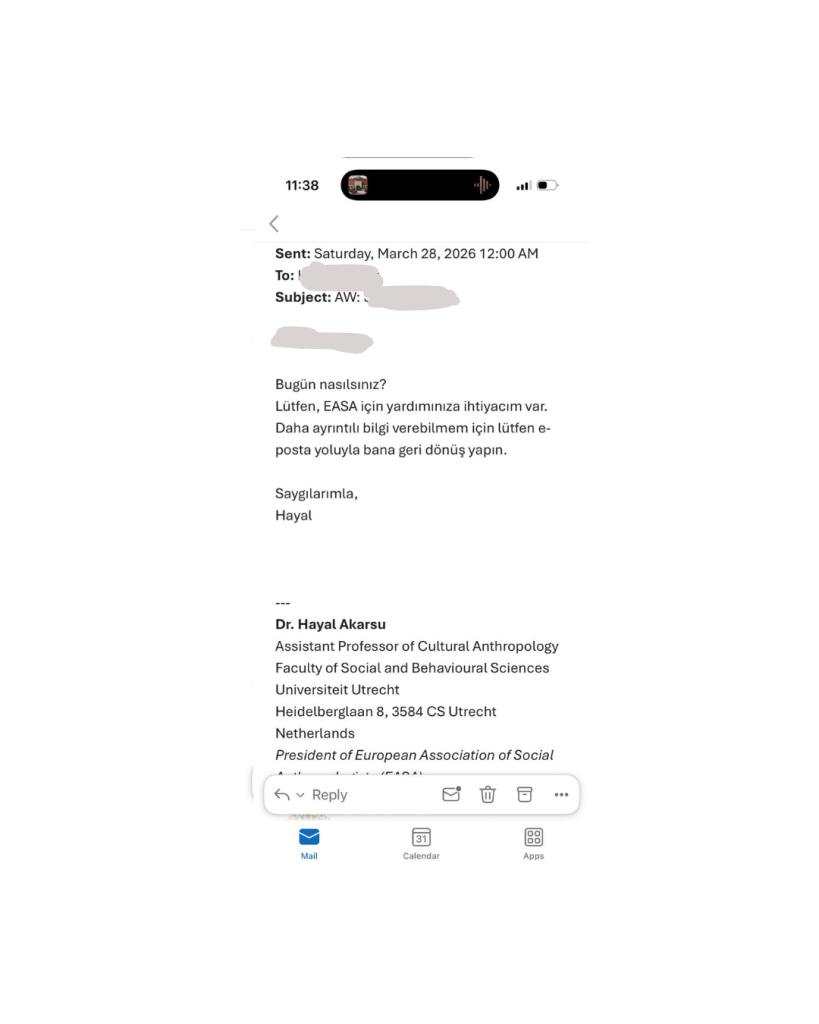
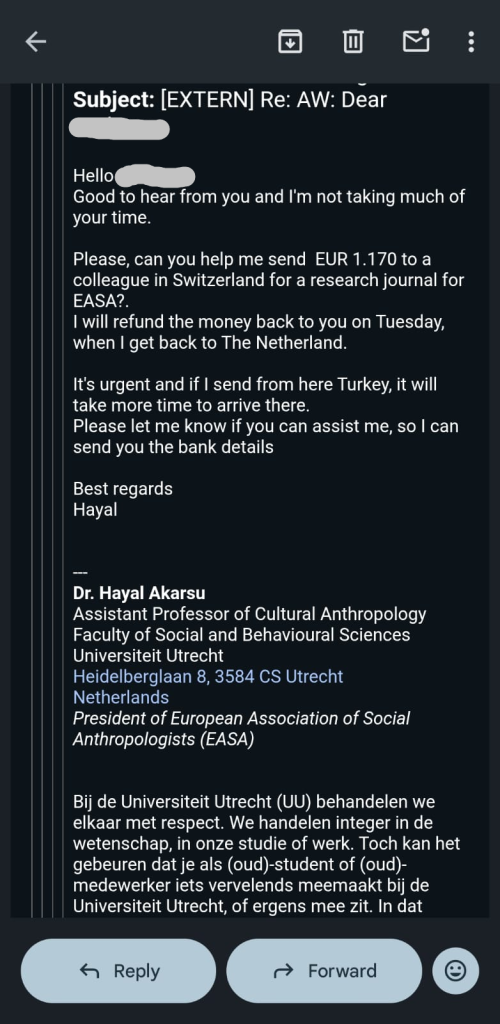
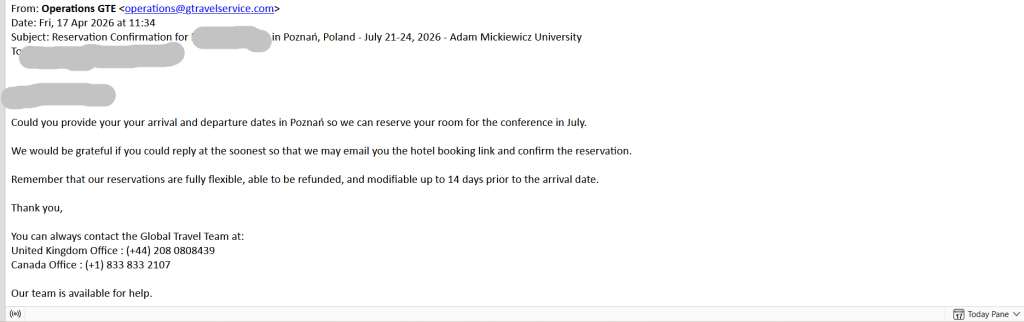
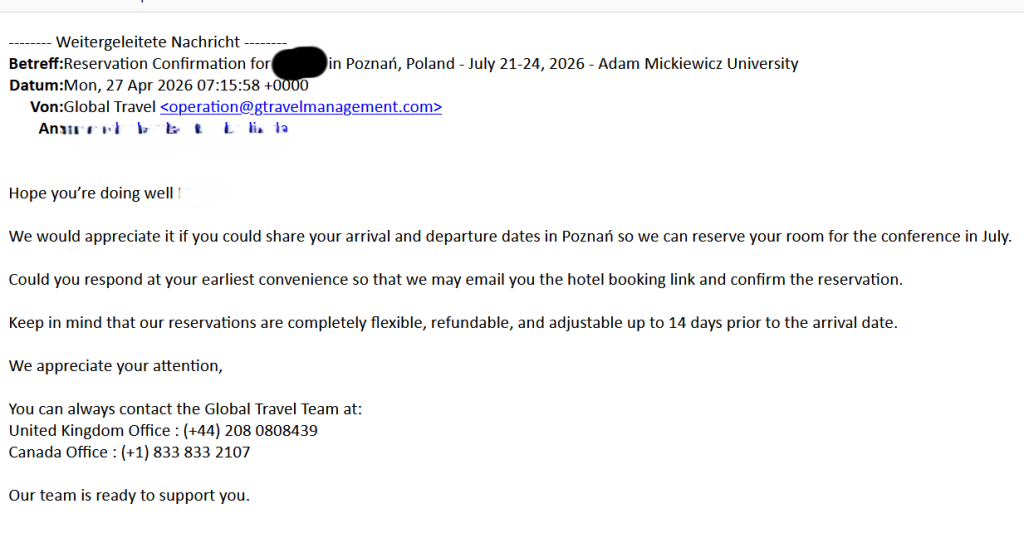
Check these simple rules to know how to avoid being tricked by fake emails:
Want to know how to avoid being tricked by fake emails? Below are some no-nonsense rules you should follow:
1. Always check the sender’s email address
- Do not trust the display name – it can be fake
- Carefully check the full email address (after @)
- Official emails come only from verified EASA domains
- Watch for small changes such as:
- @easa-online.org
- @easaonline.com
…instead of the EASA real domain. If in doubt, check the official EASA website or contact EASA directly.
All genuine conference communication will originate from the conference(at)easaonline.org, while membership-related communication will originate from membership(at)easaonline.org.
2. Be suspicious of urgency or pressure
Scammers often try to rush you so you do not have time to think.
Common phrases include:
- “It’s urgent”
- “I need this done quickly”
- “I’m unavailable right now”
- “Please act immediately”
Legitimate requests do not pressure you to act immediately.
3. EASA will NEVER ask you to send money on its behalf
- No transfers
- No gift cards
- No “temporary help” payments
- No donations
If someone asks for money in a personalized email, always treat it as a scam.
4. Look for unusual behavior
Be cautious if:
- The tone is unusual, overly formal, or desperate
- The request is unexpected
- You are asked to keep the request confidential
If something feels wrong, always check with the EASA through our official channels.
5. Double-check before acting
- Contact the person through a different channel (official email, phone, or website)
- Ask a colleague if you are unsure
- Take time to verify before responding
6. Never share sensitive information
Do not send:
- Bank details
- Passwords
- Personal data
7. Golden Rule
When in doubt: do not respond, do not pay, and verify first using the EASA official channels!