Opens in a new tab
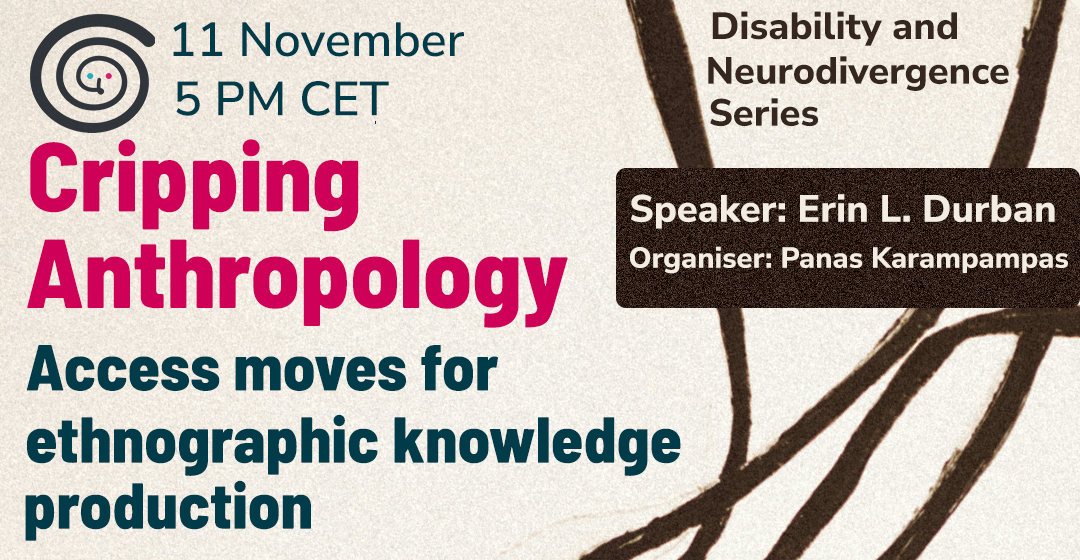
Promotional graphic for the Disability and Neurodivergence Series webinar “Cripping Anthropology: Access moves for ethnographic knowledge production,” taking place on 11 November at 5 PM CET. The design features a cream, textured background with dark brown abstract line drawings, a magenta title, and dark teal text.
11 Nov 2026

Cripping Anthropology: Access Moves for Ethnographic Knowledge Production

share this

Join us for the next webinar of the “Disability and Neurodivergence” series! On Wednesday, 11 November at 5:00 PM CET on Zoom, with Dr. Erin L. Durban (University of Minnesota).

Cripping Anthropology: Access Moves for Ethnographic Knowledge Production
The webinar is open for all, but registration is required. Click here to register and get the zoom link:

Using disability-as-method to intervene in ableist fieldwork models, this colloquium presentation offers alternative methods of ethnographic knowledge production that create greater disability accessibility and collective access in anthropology. It provides an overview of Professor Durban’s forthcoming book, “Enabling Ethnography: Anti-Ableist Research Methods in and Beyond Anthropology.” The book is a crip ethnography of anthropology that developed primarily in relation to two research projects—one an experiment in anti-ableist research design about universities and racial inequality, the other an oral history project with disabled, chronically ill, and mad anthropologists. The access moves highlighted include common affordances for individual disabled ethnographers, ways of cripping ethnographic methods specific to disabled bodyminds, and pathways towards sustainable ethnographic research through collaboration.
Speakers

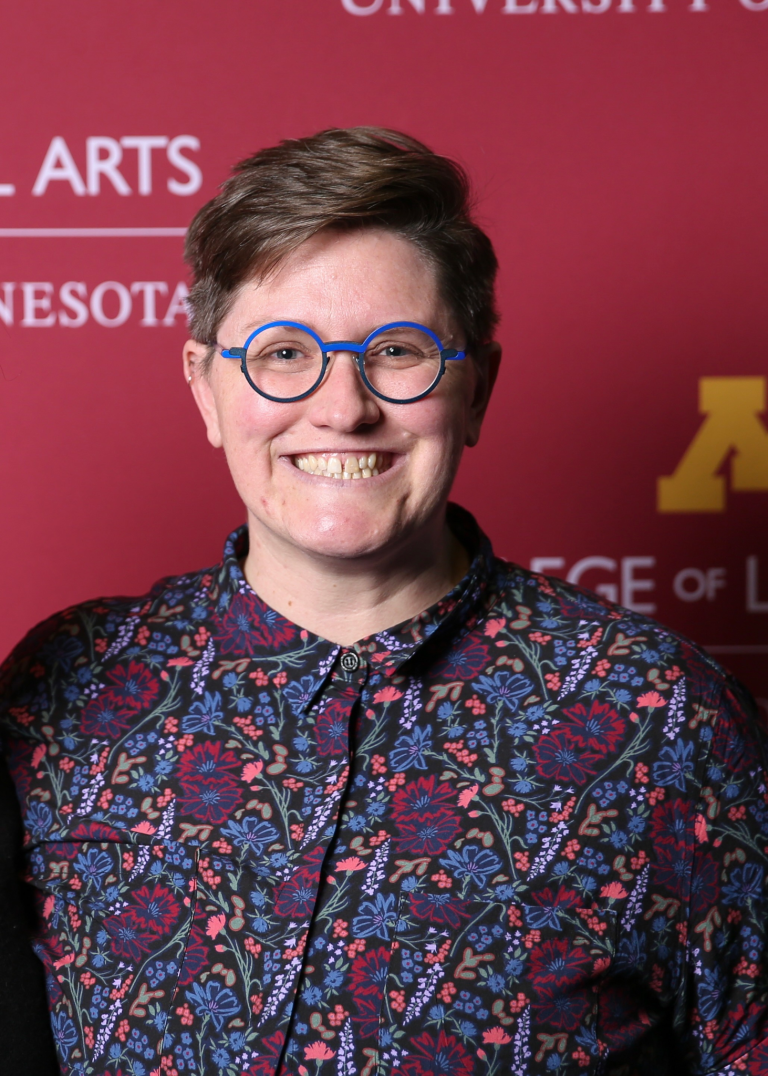
Photo of a smiling white, nonbinary professor with short brown hair, whimsical blue glasses, and a flowered button up shirt

Erin L. Durban

University of Minnesota

Erin L. Durban is an associate professor of anthropology and critical disability studies at the University of Minnesota. Their first book, The Sexual Politics of Empire: Postcolonial Homophobia in Haiti (2022), won the NWSA–University of Illinois Press First Book Prize and the Lambda Literary Award in LGBT+ Studies. Durban is finishing their second book manuscript, “Enabling Ethnography: Crafting Anti-Ableist Fieldwork Methods in and Beyond Anthropology” (under contract with University of Minnesota Press) related to the topics of the EASA session. Durban currently serves on the Disability Research Interest Group Steering Committee and is the former Chair of the Association for Queer Anthropology. They started the Sociocultural Anthropology Network for Disabled Scholars (SANDS) to connect crip ethnographers worldwide, which you can learn more about at http://www.disabledethnographers.com

(Photo of a smiling white, nonbinary professor with short brown hair, whimsical blue glasses, and a flowered button up shirt.)

Organisers

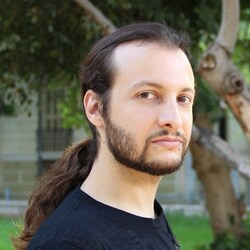
Portrait of Panas Karampampas, a persom with long dark hair tied back in a ponytail and a short beard, wearing a black T-shirt, standing outdoors with trees and greenery in the background.

Panas Karampapas

Durham University

Dr Panas Karampampas is a social anthropologist at Durham University. His work addresses intangible heritage governance, knowledge-making, dance and movement, goth scenes, and inclusive learning in primary and higher education, with particular attention to the frictions between policy frameworks and lived practice. Within EASA, he serves as Public Anthropology, Precarity, and Publications Liaison, and is involved in initiatives concerned with accessibility, mentoring, and more inclusive academic spaces.

(Photo of a light-skinned man with long dark brown hair tied back, a short beard and moustache, wearing a black T-shirt, looking towards the camera with a calm expression and leafy trees in the background.)

Contacts

Panas Karampampas