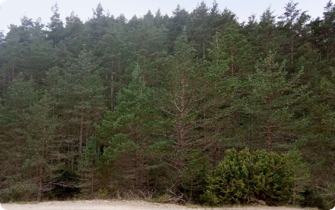
As part of its commitment to reducing the carbon footprint of the Barcelona 2024 conference, EASA has contributed €20,000 to support a sustainable forest management project in Coll de Nargó, Catalonia. Implemented by Integra Pirineus through the Department of Anthropology at the University of Barcelona, the project will manage 6.2 hectares of forest to reduce wildfire risk, improve forest resilience and restore former grazing areas. The initiative combines environmental protection with biodiversity enhancement and employment opportunities for people in vulnerable situations or at risk of social exclusion.
Press release (English translation below):
Integra Pirineus will soon begin a forest management intervention aimed at wildfire prevention in the Obaga Negra ravine area, within the municipality of Coll de Nargó, with the support of the European Association of Social Anthropologists (EASA) through the Department of Anthropology at the University of Barcelona.
Integra Pirineus will carry out a sustainable forest management intervention in the Coma de Mur area, in the municipality of Coll de Nargó, with the objective of reducing the risk of wildfires and improving the forest’s resilience. The intervention will take place in the areas known as Barranc de l’Obaga Negra and Els Prats, on publicly owned land belonging to the Coll de Nargó Town Council and included within the Natura 2000 Network.
This area is characterised by a forest landscape dominated by Scots pine stands with a high tree density (between 800 and 1,200 trees per hectare) and abundant understory vegetation, mainly consisting of juniper and boxwood. While this configuration is generally well preserved, it also entails a high vulnerability to wildfires due to the accumulation of vegetative fuel. Furthermore, the area is strategic for preventing the spread of fire. For this reason, the intervention will focus on a surface area of 6.20 hectares in order to reduce the vertical and horizontal continuity of fuel and create more open and resilient spaces.
The work will be carried out in several phases. First, shrub vegetation will be cleared using manual brush cutters. Subsequently, forestry workers will use chainsaws to selectively thin the pine stands, reducing tree density and promoting the development of the remaining trees.
The timber obtained will be delimbed, topped and extracted using a forestry tractor. At the same time, plant residues will be managed through manual piling and their subsequent removal using a hammer mulcher or manual equipment in areas that are more difficult to access.
This methodology will not only reduce the amount of vegetative fuel present in the forest but will also create open areas that interrupt the continuity of the forest landscape and act as natural firebreaks. In addition, the incorporation of organic matter into the soil will help improve soil fertility and support ecological processes.
The intervention also includes the restoration of former grazing areas that are currently overgrown with shrub vegetation. Reopening these spaces will facilitate both the return of extensive livestock grazing and the feeding of wild herbivores, thereby contributing to increased biodiversity in the area.
This project, implemented through the Department of Anthropology at the University of Barcelona, has been made possible thanks to the support of the European Association of Social Anthropologists (EASA) as part of its commitment to reducing its carbon footprint. We are deeply grateful for its invaluable support, which helps Integra Pirineus continue its strategy of promoting sustainable forest management in the region while also providing employment opportunities for people in vulnerable situations or at risk of social exclusion.