
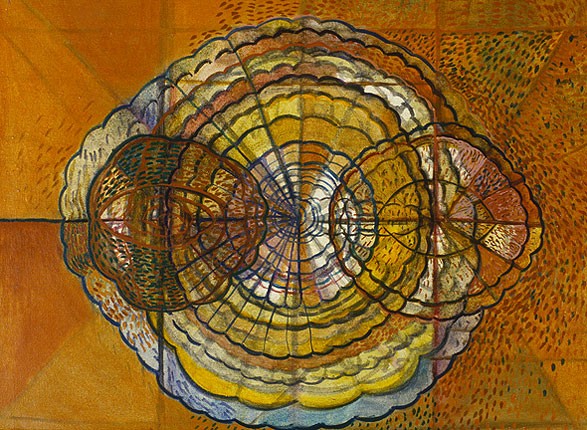
The three-day interdisciplinary interactive festival/conference “A Relational World? Shifting perceptions of the world in a time of planetary emergencies” is organized by the Department of Cultural Anthropology and European Ethnology, the Centre for Intermediality Studies in Graz (CIMIG) and the Botanical Garden (Institute for Biology), University of Graz – and has been endorsed by the EASA Decolonial Anthropology Network.
Date: Thursday, 29th – Saturday, 31st October 2026 Venue: In situ, University of Graz, Botanical Garden and Jesuitenrefektorium
Submit an abstract of 250 words and a short bio of 150 words by May 6, 2026, to: relational-world-2026@uni-graz.at
You will receive word from the organisers – Caroline Gatt (Anthropology), Nassim Balestrini (Intermediality Studies, American Literary and Cultural Studies), and Sarah Bürli (Biology) – by mid-May 2026.
Abstract
The world is currently facing multiple emergencies: social, humanitarian, and environmental. How these are perceived affects how they are studied and therefore how they are addressed with possible solutions in mind. Indeed, particular perceptions of the world also shaped how such current crises came about in the first place. This is because the different ways humans perceive the world play a pivotal role in what action is taken. There has been a gradual shift across various academic disciplines towards perceiving the world as constituted by emergent relations rather than fixed laws. For instance, the physicist David Bohm in the 1980s described two world views: explicate and implicate. In the mainstream scientific view of reality, all things are envisaged as having discreet boundaries. This is what Bohm describes as an explicate order. In an explicate order relationships do not affect an entity’s fundamental constitution, whereas, in an implicate order, everything is constituted through multiple, ongoing and always changing relations. Based on their cosmologies and in light of their historical experience of violent oppression, numerous Indigenous scholars, artists, and activists, such as Gregory Cajete, Manulani Aluli-Meyer, Joy Harjo, Bispos dos Santos, and Kyle Whyte, have become increasingly visible in showing how their ancestral onto/epistemologies envisage the world as relational in different ways. In other contexts, environmental activists and ecologists have long argued for relational understandings of the world. Processual and relational perspectives have been thoroughly theorized in philosophy (e.g., Deleuze, Guattari, and Haraway) and in contemporary music (e.g., John Cage; Raven Chacon). In biology, attention to ontogenetic development has led to increasing studies in epigenetics and the ways in which evolutionary processes are affected by experiences and behaviour of beings during their lives, not only in reproductive processes. Most recently, biologists and medical researchers are increasingly finding evidence of the relationship between gut microbiomes, soil and food microbiomes and how these can work towards the prevention of biodiversity loss and the improvement of neurological conditions.
As these examples demonstrate, historically as well as today, scholars have argued that perception itself can be understood as a relational process of mutual constitution between the thing perceived and the perceiver (e.g., Ingold and Goethe). In other words, the relationship between knower and known shapes both. What these approaches show is that understanding the world from such relational perspectives can have far-reaching consequences for understanding how to address contemporary issues.
The structure of the festival/conference will itself explore and enact relational principles, including performative and interactive keynote presentations, workshops, and visits.
Department of Cultural Anthropology and European Ethnology
Centre for Intermediality Studies in Graz
Botanical Garden (Institute for Biology)
The organisers of the interdisciplinary festival/conference “A Relational World?” invite researchers and practitioners from various fields who investigate how relational understandings of the world pertain to current global emergencies to share their work and practices. Therefore, interdisciplinary approaches, non-traditional presentations, and workshop proposals are encouraged.
Abstracts on and beyond the following topics are welcome:
• Relational onto/epistemologies and current crises
• Relational perception
• Relational perception as theme and practice in contemporary theater and performance
• Relationality, individuality, and community in contemporary art
• The impact of relational perception on artist–audience interaction
• Relational perception across media
• Relational perception as theme and practice in ecology, activism, politics
• Relational social organising
• Relational approaches to health and wellbeing
• Relational ecologies, and or economics
• Relational pedagogies
• Relational ways of knowing in education
• Relational approaches to climate change mitigation and adaptation
• Ecosystem restoration and (re?)establishing relationality between humans, plants, and the land
• What can plant sciences teach us about the importance of interdependence and reciprocity in building resilient ecosystems?
• Do conservation efforts that prioritize relationality and reciprocity with nature lead to more effective and sustainable outcomes?
• What are the implications of recognizing the relational agency of plants and ecosystems for our understanding of climate change and environmental responsibility?
• Relational approaches vis the division between natural and social sciences
• Can research be relational? Can universities be relational?
For more information please go to the conference website, which will shortly have all important details.